


Chicago Bungalow & Two-Flat Appraisal: What Determines Value?

Tags:
Residential EvaluationsIf you own or are thinking about buying a Chicago bungalow or two-flat, you may be wondering how an appraiser determines what the property is worth. These homes have some characteristics that make them different from a typical single-family house or condo, particularly when it comes to finished attics, basements, renovations, multiple units, and rental income.
The better question is not simply, “How much is my Chicago bungalow worth?” It is: What features actually affect value, and how does the market react to them?
What Makes a Chicago Bungalow Different to Appraise?
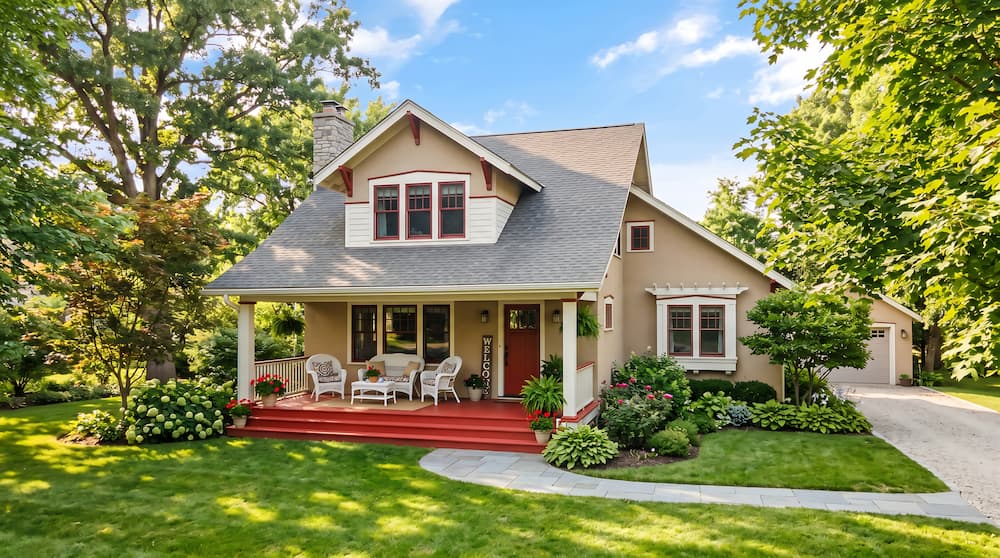
A Chicago bungalow is typically a one-and-a-half-story home with a full basement and an upper half-story or attic. Chicago has more than 80,000 bungalows, making them a significant part of the city’s single-family housing stock.
But two Chicago bungalows can be very different properties.
One may have an unfinished attic and original kitchen. Another may have a finished attic, remodeled kitchen, updated mechanical systems, finished basement, and newer windows. They may look similar from the street but compete very differently in the market.
How Much Is a Chicago Bungalow Worth?
There is no single value for a Chicago bungalow based on the style of the house alone.
Location is one of the biggest factors. Condition, lot size, finished area, parking, basement and attic utility, updates, layout, and the quality of the improvements can all affect value.
This is why an online estimate or a simple price-per-square-foot calculation can be misleading. The most useful comparison is with properties that buyers would actually consider substitutes for the subject property.
Does a Finished Attic Increase Chicago Bungalow Value?
It can, but the answer depends on how the space functions.
A finished attic may provide additional usable living space, bedrooms, an office, or recreation space. However, finished attic space is not automatically treated the same as standard above-grade living area.
An appraiser will consider factors such as ceiling height, accessibility, windows, heating and cooling, finish quality, and how the space is used.
In other words, finishing an attic does not automatically add the cost of the renovation to the value of the house. The important question is how buyers in that market view the finished space.
Does a Finished Basement Increase Chicago Bungalow Value?
A finished basement can contribute to the value of a Chicago bungalow, particularly when it provides functional additional space.
But basement space is generally analyzed differently from above-grade living area. Its contribution depends on the quality and usability of the finish, ceiling height, access, bathroom or kitchen improvements, natural light, and what comparable buyers are willing to pay for similar space.
A basement renovation can be valuable without adding dollar-for-dollar what the homeowner spent on it.
How Much Have Chicago Bungalows Been Updated?
There is no reliable Chicago-wide percentage that tells us how many bungalows have been renovated. More importantly, renovation history can vary dramatically from one property to another.
Some bungalows retain much of their original character. Others have updated kitchens and bathrooms, newer mechanical systems, finished basements, finished attics, additions, or other major improvements.
Permit records can provide useful information, but they do not necessarily tell the entire story of a home’s renovation history. Some work does not require permits, while other work may have been completed without the required permit.
For an appraisal, the condition and actual characteristics of the property matter more than simply whether a renovation appears in a permit record.
Do Chicago Bungalow Renovations Add as Much Value as They Cost?
Not necessarily.
This is one of the most important things for homeowners to understand before remodeling. Spending $75,000 on a kitchen does not automatically mean the home’s market value increases by $75,000.
The market determines the reaction.
If buyers in that neighborhood strongly prefer updated kitchens, the improvement may have a significant impact. If the renovation is highly customized or goes well beyond what is typical for competing homes, the return may be different.
The same principle applies to finished basements, bathrooms, additions, landscaping, and other improvements.
We’re not just adding up renovation receipts. We’re looking at what buyers are actually paying for similar properties.
Why Is a Chicago Two-Flat Different to Appraise?
A Chicago two-flat appraisal has another layer of analysis because the property contains two dwelling units.
The appraiser needs to consider the characteristics of both units, including bedroom and bathroom counts, size, condition, layout, utilities, parking, basement space, and overall functionality.
There is also a different buyer pool. A two-flat may appeal to an owner-occupant who wants to live in one unit and rent the other, or to an investor looking at the property primarily as an income-producing asset.
Two-flats are also a significant part of Chicago’s housing stock. Chicago Architecture Center notes that two-flats, four-flats, and six-flats together account for more than 30% of the city’s housing stock.
Does Rental Income Affect Chicago Two-Flat Value?
It can.
Rental income may be an important consideration when analyzing a two-flat, particularly for an investor or an owner-occupant who plans to rent one unit.
But a two-flat is not valued simply by multiplying monthly rent by a formula.
An appraiser may consider the property’s actual rents, market rents, expenses, condition, location, and comparable sales. The income characteristics need to make sense alongside what similar two-flats are selling for in the market.
That is one reason a two-flat appraisal can be more involved than a typical single-family appraisal.
Why Does Location Matter So Much for Chicago Bungalow Value?
Chicago bungalows are spread across many different neighborhoods, and the market can vary considerably from one area to another.
The same basic bungalow design can have a very different value depending on its location, surrounding housing stock, transportation, schools, amenities, lot characteristics, and buyer demand.
That is why a Chicago bungalow appraisal needs to be based on relevant local comparable sales, not simply a citywide bungalow average.
What Should You Know Before Getting a Chicago Bungalow Appraisal?
If you are having a bungalow or two-flat appraised, it helps to have information about major improvements and renovations available.
That might include:
-
- Remodeling dates
-
- Major kitchen or bathroom renovations
-
- Finished attic or basement work
-
- Additions
-
- New roof or windows
-
- HVAC and mechanical updates
-
- Parking improvements
-
- Relevant permits or plans
But documentation is only part of the process. The appraiser still needs to determine how those improvements compare with competing properties and how the market reacts to them.
When should I get a Chicago real estate valuation?
Common situations include buying or selling, refinancing, estate and asset-related matters, tax or legal purposes, and other situations where an independent opinion of value is needed.
If you are in a situation that needs a appraisal or valuation contact Akrivis today!